Elvis Himselvis

This year, 2019, has already taken the lives of two of those who – although virtually unknown in the outside world – were very closely associated with Elvis Presley, singer, who died in 1977.  They were members of what the press dubbed the “Memphis Mafia,” a circle of men who were around Presley more or less constantly, fulfilling his every command and bowing to his every whim.  For these guys, he was without a doubt the Boss.

The first to die this year was Rick Stanley, who, in law, was Presley’s stepbrother, because his mother married Elvis Presley’s father, Vernon, in 1960, two years after the death of Presley’s own mother.  Stanley passed away on January 7 at the age of 65.  After Presley died in August 1977, just a month or so later, Stanley had some sort of religious experience, and became a Baptist minister.  One is left to wonder why it is that Stanley didn’t have this “religious experience” before Presley died, and he wouldn’t have been so complicit in supplying the King of Rock with powerful prescription narcotics.

The second person from Presley’s inner circle to die this year was George Kleinwho met Presley when in the Eighth Grade at school in 1948, almost as soon as the Presley family had moved to Memphis from Mississippi in search of a better life. Klein remained friends with Elvis until the singer’s death almost thirty years later.  Klein had forged a career of his own as a television and radio disc jockey, and my dear wife Jane and I both remember listening to him on Elvis’ own digital radio station on Sirius during our visits to the USA in 2006, 2007 and 2008.  He was a great deal of fun with a wonderful sense of humour and a generous spirit.

I have always been intrigued by the story of Elvis Presley, as many of my fans – almost one – know only too well, but they may not be so aware of the reasons behind my fascination with Presley, his life and career, not to mention the lives of those around him.

Elvis Presley became a huge star – so massive a legend, in fact that it is said that there is nary a human on this planet who doesn’t know Presley at least by name.  You would have to go to the darkest recesses of the Amazon to find someone who would answer the question, “Do you know of Elvis Presley?” with, “Who?”

When an 18-year-old Elvis Presley first entered a recording studio with his beat-up guitar in the summer of 1953, the idea of becoming one of the 20th Century’s most recognised cultural icons was very far from his mind.  He probably wanted fame, and very likely money, and the visit to the studio that day was purely so that he could find out if his voice sounded as good as he thought it did.  It did.  The recordings themselves were not found and released until July 1992, upon the release of the boxed set The King of Rock ‘n’ Roll: The Complete 50s Masters (1992).  They are artistic milestones in themselves; but at the time neither Presley nor the other person in the room that day, Sun Studio owner Sam Phillips’ secretary, Marion Keisker, were aware of this.

When Elvis Presley first opened his mouth to sing ‘My Happiness,’ Ms Keisker immediately realised that here was a young man with considerable ability and a great deal of raw talent, and switched on the tape machine to record it for Sam Phillips to hear later on.  Presley had paid $4 to record a demo which in those days was cut directly on to the lacquer disc, and not recorded to tape unless, as in his case, they were really good.  When one listens to the tape today, one gets a real sense of being there at that moment in time, always a sign that it is a great record, despite the fact that Elvis’ guitar is not quite in tune, and neither is his voice on every single note, because here is an untrained singer in the technical sense.

Eventually, of course, Phillips got to hear the tape, and the rest is history.  And it is those last five words that are the key ones.  Elvis Presley became history; a man who has been written about more than most other artists in his field combined.  Certainly, the number of books I have read about him and his music would number well into the hundreds.

Indeed, I am reading two now: one is called simply Being Elvis by the respected journalist Ray Connolly; while the other is called Baby Let’s Play House: Elvis Presley & the Women Who Loved Him, published in 2010.  After August 16 this year, when the 42nd anniversary of Elvis’ death is commemorated by a candlelight vigil at his grave on the grounds of his legendary home, Graceland, we will be just a few months from the fact that the singer will have been dead for longer than he was alive.  And the amount of interest around the world shows no sign of abating whatsoever.

Why is this?  What is/was it about Elvis Presley that made him so well-known, so respected – and also disrespected, too, let’s acknowledge that – just so…famous?

Presley had a unique quality.  First of all, there was the Voice. It was a good voice, for sure, and with work, became better and stronger throughout his career, but by good fortune it had the quality that record producer Sam Phillips was looking for – a white singer that could sound like a black one.  The reason for that was because much of radio at that time, as well as people’s lives in general, was segregated, resulting in stations that played only “white music,” and others that played only “black music.”  Phillips was a visionary; he wanted stations to play both.  He believed this would break down the barriers of racial prejudice that was rampant in the USA at that time.  And, to a degree it did, over time.  Presley’s music was definitely a contributory factor, but that came later; first, came a great deal of racial name-calling and derision directed at the singer.

But, it wasn’t simply the voice.  Presley initially struggled in the recording studio.  Phillips asked the then-19-year-old singer what he knew; the young man ran through song after song after song, mostly ballads – unbelievably, Presley imagined himself being a lounge singer or a crooner like Dean Martin.  In his wildest dreams, Presley’s ultimate wish was to sing lead in a four or five-part gospel group.  I know, it’s difficult to believe, but that was the case. But none of the ballads that Presley offered seemed to be working; they tried ‘I Love You Because’ and ‘Harbor Lights’ in the studio, and while his voice sounded fine, it wasn’t setting the world on fire.

They took a break.  To relax, Elvis picked up his guitar, and began to strum a blues tune, Arthur Crudup’s ‘That’s All Right.’  Elvis became known among his friends for his sense of humour, and here he began speeding up the tune, playing it like a fast country number, laughing all the time.  The band, too, began to relax; and they joined in – Scotty Moore on lead guitar and Bill Black on bass.  Producer Phillips came running in; the band stopped.  “What in the hell was that?”  he cried.

“We don’t know,” was Presley’s reply, “we were just goofing off.”  “Well,” said a forthright Phillips, “find out, rehearse it, and let’s record it!”  I would imagine that nobody was more amazed in the studio that night than Elvis Presley himselvis, as the late George Klein used to say.  That was the ten or so minutes in July 1954, as the world carried on whatever it was doing, that popular music – indeed, popular culture, was changed forever.  Sam Phillips had found exactly what he wanted.  And, it turned out, he was right; he could cross racial barriers with music – reach out and cross lines that had not been crossed up to that point.

But, it wasn’t simply the good fortune.  Elvis Presley was an extremely good-looking individual, blessed with a look that not only pleased his female audience, but meant that he photographed well and could be seen in many more magazines, newspapers and so on than most of his contemporaries.  It is said that much of the credit for his good looks came from his partly Cherokee ancestry.  He not only had the look, but the ability to move on stage in a way that pleased his female audiences, too.  He took the uncontrolled bodily movements of the evangelical preachers he had watched all his life, and transformed them into pure, unadulterated (for that time) sex.  Remember, much of white America at that time was not only racist but extremely prudish; when Elvis’ popularity began to spread, the parents said, “No!” while their daughters said, “Go!”

Finally, of course, there was his manager, a legend in his own right, a man with almost as much charisma and personal manager as his protogée, ‘Colonel’ Thomas Andrew Parker; or, simply, “The Colonel.’  Parker began to manage Presley in 1955, and remained his manager, while Presley remained Parker’s only client, right through to the bitter end, when Elvis was found face-down on that bathroom floor on August 16, 1977.  Indeed, Parker managed Presley’s estate until 1982, when he was kicked out by Presley’s ex-wife, Priscilla, and her lawyers.  I never saw a sadder figure than a short video of Parker around 1987, a lifelong gambling addict, putting money into a slot machine over and over, trying to get that elusive high, nobody around him.  His purpose in life was gone; he lived on until 1997, always convinced that he had done nothing wrong in the context of his management of Presley’s career – one that was littered with strange career choices highlighting and almost certainly caused by extremely bad management decisions.

All of the above factors combined for the kind of fame that seemed to have been predestined at the beginning of time; Elvis had it all.  He wasn’t missing one thing; say, for example, possession of a great voice but with a face like the back end of a yak. No, he definitely had it all.  He couldn’t simply sing but dance like a disabled octopus, he surely had it all.  It wasn’t as though he was extremely good-looking but with a voice that sounded like an oil tanker in distress, it was obvious he had it all.

The kind of odds against having half a dozen factors in place, maybe more that I’ve missed out, are astronomical – and I kind of mean that literally.  The world success he experienced, while not that important in a universal context, but seemingly came prepackaged from the Universe at the beginning of time, just as it would be for some poor sod to be born with a face like a sack of carrots, a voice like the end of a bagpipe concert, and movements that could be used to demonstrate electrical impulses in the brain, that even his parents have hardly heard of.  Furthermore, in Presley’s case, it was very much a factor of the old cliché, being born at the right place and at the right time.  How many millions, or billions, of us, go unrecognised because we have no gift, no power to work hard, their breath gets lost in the wind, and their voice is silenced by the Universe.  But one – a young trainee electrician from Memphis, Tennessee, becomes one of the most famous men in world history.

Unfortunately, Presley’s unique and very significant gifts did not extend into his private life; his life was something he was totally unable to control.  He had – and it seems obvious from certain family members on his mother’s side in particular that it was genetically inherited – what I think appears to be some sort of full-functioning bipolar disorder.  I am no doctor, I could not offer a final and conclusive diagnosis, but there is evidence for this in certain incidents in his life.  I do not think it is wise or sensible to go through them now; perhaps in another blog.

Being brought up in the South, Elvis was very much the Southern man.  He could be racist without realising it, yet at the same time could not help but acknowledge the influence that black music and its musicians had upon his life; during his ‘Vegas’ years, he brought in a black vocal group called The Sweet Inspirations, and used them right to his very last concert in 1977.  Elvis could be sexist also; he considered that his wife, Priscilla, should be obedient to him; she should stay at home looking after the family, while he went to Hollywood, or later on tour, having sex with any girl who took his fancy.  It was no wonder she divorced him in 1973, although they did remain friends until his death, sharing responsibility for their daughter, Lisa Marie.  When Priscilla first heard of her ex-husband’s death, the first thing she did was to hop on the plane named after their daughter, head for Graceland, run upstairs and collect a number of video tapes containing pornographic footage of herself that were made for Elvis’ pleasure in the 1960s.  God, if those tapes ever got out…

Elvis had a foul temper.  It could, typically, withstand major stresses and psychological trauma but then explode in a volcano of inappropriate severity over some extremely trivial matter.  Again, the temper was in part genetic, but it was also affected in the negative by the ever-increasing amount of prescription painkillers that he was taking.

Then there were the two sources of both derision and humour that continue to this day: his drug habits and his eating habits.  Again, Presley was so famous that whole documentaries have been made on the foods that he ate.  Well, one, anyway.  Called The Burger & the King, it told of the massive, 14-inch long, bacon rolls that allegedly contained a gut-busting forty-two thousand calories each, and Presley didn’t stop at eating one of them.  He would delight at being able to show off to his friends.  Here he was, a poor Southern kid, who could call a pilot at his command, have him prepare a four-engine jet that he owned, and fly from Memphis to Denver, Colorado, to pick up an order of ‘Fool’s Gold’ sandwiches, as they were called, and fly back home again.  Elvis could do that, and he wanted people around him to know it.

Of course, in studying Elvis’ place in the Order of Things, it is worth considering that his friends, each one of them, must have come through the kind of extraordinary genetic lottery in order to have even been born around the same time as Elvis, as stupid as that sounds.  Since Elvis died, each one of them has written a book, in some cases more than one.  That’s around twenty books right there.  Each one telling the story from their own perspective, and each one’s primary purpose being to exonerate themselves from any blame whatsoever when it comes to Elvis’ drug addiction and death.

Why am I here?  Why am I doing what I’m doing?  Why did this happen to me?  These are all questions that Elvis pondered very deeply indeed throughout his life.  There are explanations which can be made both physically and logically, and some which perhaps will forever remain a mystery, and could be applied to anyone whose place on Earth has had a profound effect upon people in all corners of the world, but also has remained so for many decades after his death and shows no sign of slowing down.  And – who knows? – Elvis Presley, along with The Beatles and Dumpy’s Rusty Nuts, may well be remembered for many decades and centuries to come. x
Still Banging on About Brexit

I expect that, in years to come, people will read blogs such as mine and think that we were off our collective rockers, talking and writing obsessively about something that really turned out to be not that important at all.

But the truth is that, for us, as of now, it does matter.  It matters a lot.

What matters is that we have no idea what’s going to happen to our country, and its relationship with other EU nations, the U.S., China – and every other nation in the world, particularly in the area of trade.  Trade is important because for centuries we have used it to make lots of money.  Money is the object of trade, it’s what keeps our political elite on their yachts, in their mansions and swanning around their parklands.

And, just as importantly, we don’t know what’s going to happen to our relationship with ourselves.

Europe, with the help of our beloved news media, has divided this country like no other issue has ever done before.  Not World War II, not the F.A. Cup, not Blur vs. Oasis, not The Beatles vs. The Rolling Stones – nothing has split this nation asunder like Brexit.

There, I said it; Brexit.  Brexit, Brexit, Brexit, Brexit, BREXIT!!!!!

It’s a word that was first coined on Twitter in 2012; and, almost seven years later, it’s a word used in almost every household almost every day, by almost everyone in it.

I know folk who have already begun to stock up on dry and tinned food, not to mention stuffing their freezers full of perishables, ready for that big day when we wake up on March 30, 2019, stateless (well, not quite, but it sounds good) and alone.

We will, however, be an isolated state, a fractured state, and an aimless state, gently floating away from the European mainland as we begin our slow journey across the Atlantic, before eventually tapping on the East Coast of the U.S.A., swallowing our pride and asking Donald J. Duck for help.

There are times, I must admit, when I think this whole thing is a media stunt, designed to scare the stuffing out of the population and then divide them right down the middle.  You know the old adage: divide and rule.  Then, slowly but surely, and always just at the last minute, things get sorted out and by the time the deadline – or any agreed later deadline – comes along, all has been agreed and, phew!, we got there by the skin of our national teeth.

Brexit isn’t going to happen, is it?  It’s all a political and media stunt, isn’t it?  After all, politics has long been showbusiness, played out on our news media to fit snugly between EastEnders and the latest remake of Pride & Prejudice.

Actually, thinking about it, it seems that Jane Austen’s title of 1812/13 is somehow prophetic as of today, and could well be used as a title, or subtitle, of The Brexit Story.  Pride – you are not going to change my position on the EU, and Prejudice – well, that one’s pretty obvious.  Foreigners go home, just because you are foreigners.  The island mentality comes pouring back.

Some ‘Brexiters’, the term used for those who have stated they wish to leave the E.U., say that the 2016 Referendum attracted the biggest turnout in British political history.  Well, that’s not quite true; indeed, analysts who examine this sort of thing have determined that, purely in terms of percentage of those eligible to vote, the EU Referendum only makes fifteenth on the list of postwar elections and referenda, with 72.2%.  The highest turnout in the United Kingdom (excluding the Scottish Referendum) was the 1950 General Election, with 83.9% of the electorate turning up to vote.

In terms of pure numbers, things are a little bit different, but still the 2016 Referendum does not come out on top.  It’s still a lie to claim the highest turnout in British political history.  Furthermore, the numbers rarely take into account the most obvious caveat which is the sharp rise in population since 1945.

Then there is The Deal.  According to our beloved news sources, Puppet Prime Minister Theresa May has been running backwards and forwards to Brussels trying to get a deal that is supposed to be best for the United Kingdom, who voted to Leave the EU in 2016.

God, there are so many issues here, I hardly know where to begin.  First of all, the country did not vote to leave the EU.  A slight majority of 1.9% did, it’s true; but in matters of such political and economic importance, should the majority required be higher than that?  In badminton, for example, you can only win a game if you are leading by two clear points or more.  No-one complains if, at 21-20, you haven’t one the game; those are the rules and you accept them.  David Cameron ought to have said, look, we need a clear majority of, say, two thirds or more, in order to get this one through.  Otherwise, it’s going to look like the country is as divided as my political party is, which is the reason I called the referendum in the first place.  In Parliament, a political party needs 326 seats out of 650 in order to call itself a majority government, so that, if all their members vote with official party policy, they can still outvote all of the other political parties combined.  It doesn’t have to be that way, it just makes common sense, and we accept that.

Secondly, Mrs May is trying to get a deal that contravenes other deals that her predecessors – even prime ministers of her own political persuasion – worked hard to achieve.  I write, of course, of the Good Friday Agreement, reached in 1998 after years of negotiation over an issue that had divided the country right down the middle.  Sound familiar?

Only one party walked out of the discussions for that agreement – the Democratic Unionist Party, or DUP, who funnily enough are currently (as of 2019) propping up the Conservative government, who failed to get the kind of majority of which I wrote earlier in the 2017 General Election.  Now, the DUP must love the fact that any deal that Mrs May could finally achieve is one that will shit on the Good Friday Agreement from a great height.  On 22 May 1998, Northern Ireland held a referendum on the agreement, and 71% of those who voted accepted it, on an 82% turnout.

The sticking point is the border between Northern and Southern Ireland, who will be staying in the EU, and still using the Euro as its currency.  Since the Good Friday Agreement, there has been an ‘open and barely discernible’ border between the North and South; the only noticeable changes will be between the use of imperial and metric measurements for distances, and from the Pound to the Euro for its prices.

In the ‘unlikely’ event of a deal not being reached and the UK leaving the EU anyway (which, by the way, the Prime Minister promised to try and stop before the March 29 deadline), there is a ‘backstop’ in place that would prevent, or so we are told, a hard border being introduced on one of the most politically sensitive pieces of land in the entire EU.

To get Parliament to pass any legislation that involves this backstop, Mrs May’s minority government will need the 10 votes offered by the DUP.  Only problem is, the DUP opposed the Good Friday Agreement, and they oppose the backstop.  They definitely want a hard border between Northern Ireland and the Republic south of it.

So, at the moment, the Prime Minister is unable to reach a deal with the EU that Parliament will accept, and, if the country leaves the EU before any deal has been reached, the DUP will oppose that and give the opposition a chance to defeat the government on the backstop.

Holy crud, that’s complicated.

Under the terms of the Good Friday Agreement, there must be free movement between the North and the South, and, perhaps even more importantly than that as far as our money-grabbing conservative government is concerned, the North and South must share trade deals that are signed with the EU.  There are a whole raft of reasons why this is important, but I don’t think it’s helpful to go through them all here.

Right, where are we?  Oh yes, Mrs May is in the position whereby she cannot gain sufficient majority to achieve an overall majority concerning any deal she can get with the EU, and she cannot guarantee an overall majority over the backstop, which must form part of the deal if Parliament were to agree to it, but she cannot get a majority of agreement about what to do with Ireland if, as seems likely, the UK leaves without a deal.  Stuck between a rock and a hard place, it would seem that the Prime Minister really has no idea what to do.

Northern Ireland, the movement of its citizens, and its involvement in any trade deals that the UK or the Republic might agree in future with the EU, looks set to be the issue that could bring down Brexit and, most likely, the present government also.

As a lifelong anti-Tory, I couldn’t be happier; however, it doesn’t mean that any replacement government would not be Conservative.  Once Theresa May goes, it will only allow Boris Johnson in – Britain’s Donald Trump.

STRONG LANGUAGE ALERT:

Britain is fucked.  Fucked right up the arse with a broken broom handle.  Britain has bent over, opened its cheeks and taken it right up the backstop from its own government, its own government’s own party, the EU, and its so-called coalition partners, the DUP.  The Labour Party, under the ‘leadership’ of Jeremy Corbyn, decided not to participate.

The part of the British opposition party in all of this really could be the subject of an entire blog post on its own.  When Jeremy Corbyn got elected in September 2015, it seemed like he was the saviour of the Labour Party; but of course, if it seems too good to be true, it almost invariably is.  And so it proved, as Mr Corbyn got shafted by his own party; those pesky ‘centrists’ took him aside and said, Look, Jezza, mate, we don’t want any of your pro-union, pro-Nationalisation, pro-fairness for everybody, oh – and anti-Semitic nonsense here, otherwise we’ll make it so you have a really nasty accident and end up forced out of your job.  So, when it came to being buggered by the EU, I expect the Labour Party declined because they were just tired.

In the last few days, Mrs May announced that she would, if Parliament rejected the deal she had reached with the EU, ask to extend the Article 50 process of departing Europe as a trade partner.  Remember, the Tories would like it if we left the EU but still had all of its benefits, like profits of trade agreements that look like EU deals, but aren’t, because we’re not in it anymore.   Labour’s response to this, well done Mr Corbyn by the way, was to announce that they would support a ‘People’s Vote.’  This, apparently, is a watered-down ‘second referendum,’ offered by the Labour Party, who, like the Tories, are split right down the middle over Europe.  Instead of opposing the government, like any good opposition should, they have promised to ‘honour the will of the people’ – see my rant above on that issue – and carry out Article 50 and our departure from the EU to the bitter end.  And the end will be bitter. Their ‘People’s Vote’ would be on the deal itself.  The result of that would be very interesting indeed.

There is so much more to write about Brexit that I shall have to reserve it for a future blog; I’m tired, and I’ve got other stuff to do.  But I will conclude this episode by quoting from the Beatles: “And in the end, the love you take, is equal to the love you make.”  Think about that, and then apply it to Brexit.  If, at the end of the day, this issue ends up fracturing the United Kingdom into tiny pieces, which is entirely possible here, then we could be in real trouble for all sorts of reasons, and this current Parliament could go down in history as simultaneously the most dangerous yet ineffective Parliament here has ever been in the whole history of Britain. x


It was Brexit That Caused the Exit

This morning the world woke up to the news that seven MPs from the British Labour Party, aka The LaBlair Party, resigned because of party leader Jeremy Corbyn’s attitude towards Brexit – and, basically, everything else.

Most of the world couldn’t care less about it, but those of us in the United Kingdom, such as it is for the time being, do care, because, apparently, they are making some sort of stand that Mr Corbyn is not the right kind of leader for the leftist party.

Not the right kind of leader, is he?  This, I fear, may require some of the inimitable Butler analysis – not factually correct, completely misunderstood, free-flowing stream of consciousness nonsense that may or may not make sense at the end of it.

I don’t know whether it’s worth naming all the MPs, but Chuka Umunna is probably the most well-known of them.  This guy was only elected as an MP in 2010, and within 18 months, he was Shadow Business Secretary.  This fellow was/is clearly ambitious; yet when he had the opportunity to go for the top job in the party, in 2015, he withdrew his candidacy after just three days, citing his discomfort with the level of media scrutiny that goes with such things.  Well, you can’t help but think there must be skeletons in his cupboard, can you?

Since that time, 2015, he’s done very little except return to the backbenches, which he did after Jeremy Corbyn won that election.  It’s obvious that he wasn’t happy with Corbyn’s victory.  But it’s taken him three and a half years to get his arse off that bench and into what appears to be the formation of a new party, The Independent Group.

But…see, the problem here is that he was elected as a LaBlair MP (in Streatham, as it goes) with a very slim majority (about 3,500), and now he wants to form his own party; fair enough, but that should trigger a by-election in my humble opinion, but he has told the media that that is not in his plans.

In fact, I’m pretty sure that none of the seven MPs are going to face a by-election based on their new party.  The Independent Group might be a clever name, but those who don’t know them so well might be wondering just what it is they are independent from.  They need a by-election in order to ram down the electorate’s throats what it is they are standing for, or better yet, what it is they are standing against.

But, these people are politicians first; meaning that more important than winning anything for their constituents or their country is looking after themselves.  Dave Prentis, leader of my own union UNISON, said that today’s news was “terrible news” for working people because “split parties don’t win elections.”  There you are.  You can’t put it any simpler than that.

Admittedly, one or two of the new Independent Group have found departure from the Labour Party very difficult indeed; Chuka Umunna isn’t one of them.  Mike Gapes looked like his world had crashed down as he spoke; his stand – not to mention that of one or two of the others – is based on the perceived anti-Semitism that has emanated from the party since Corbyn’s election.

However, it is not simply Corbyn who has been accused of this: according to the BBC, where I get most of my rant sources from, the party has received 673 complaints alleging acts of anti-Semitism by its members.  Ninety-six party members were suspended between April 2018 and January 2019.  That’s astonishing, and really quite grim.

Indeed, some MPs believe the figure of 673 complaints to be a little on the generous side; the number may well be significantly higher.  If that is the case, then as far as I am concerned, the Labour Party might as well be fractured now because there is no chance that they can win the next election, or any in the foreseeable future, and neither should they if they are to build policies based on an anti-Semitic standpoint.

Those who have departed the party on those grounds are doing the right thing, even though it is likely to cost Labour the next election.  But Chuka Umunna isn’t one of them.  He did not cite the party’s anti-Semitic reputation as a reason for his departure.  I think he simply doesn’t like Jeremy Corbyn.  Plus, he wants to be leader of a party that is nowhere near Labour, but isn’t quite Tory, either.  Basically, New Labour reinvented.

I also believe that, despite leaving the party on solid principles, the other MPs who have taken an anti-anti-Semitic stand should also face a by-election, for reasons that I have stated above.  The additional nobility of their cause should not mean that they get a free pass to the next round, so to speak.

If Labour is as anti-Semitic a party as these almost 700 complaints suggest, then they are no party fit to govern this country.  But, that begs the question: what is the alternative?  The Tories?  The Liberal Democrats, God help us.  UKIP?

British politics is f***ed anyway.  The major parties – and some of the minor ones – are fractured, split down the middle, and in most cases it is Europe that’s done it.  Let’s face it, if you’re Labour or Conservative, left or right, you have no alternative in the polls.  Nowhere else you can go.  Perhaps voters ought to form their own coalition(s) and vote for themselves in the next election.  My own view is that any current, or still-living previous MP should not be allowed to stand in the next general election so that we get a completely clean slate in 2022, or whenever it is.  British politics is in total disarray; they have let us down completely, because – whatever party they represent – they all became complacent, and now once again it is the British People who must pay the price. x

…and in the End, the Love You Take, is Equal to the Love You Make

Here we are, as of the date of this blog, in the midst of the worst crisis in English political history.  So forgive us if we bang on about it.

Brexit has divided the former “United” Kingdom up and down the middle.  A referendum on membership of the EU was promised by David Cameron in his 2015 election manifesto.  Because we (the Conservative Party) cannot decide between ourselves on the issue of European membership, we’ll let the country decide.  This is what happens with indecisive governments; you will notice that all of the national referenda since 1975 have been held under Tory rule.  OK, 1975 was under Labour rule, so it was the last two, then.  All right, I’ll let you have the 2011 one as well, that was about changing the voting system in the UK and that was given under a Coalition of Conservative and Liberal Democrat rule.

So, it’s just this one, then.

Ever since, oh God, for ever has the Conservative Party been completely divided on Europe.  All of our major political parties seem to have some issue or other that just totally rocks their boat – with “New” Labour, under Blair and his pet dog Brown, it was devolution and its various dependent issues.  The current Labour lot, under Jeremy Corbyn, seem to be divided on just about everything, including Europe as well, but one of the main issues is the divide between those who cling on to Blair’s and/or Alistair Campbell’s vision of “New” Labour and the traditional left-wing policies that Corbyn was elected to assist the party to go back to.  I could go on about that, but that would deserve, I think, a blog rant, or blant, entirely of its own.

Let’s just accept for now that Jeremy Corbyn and his leadership of the Labour Party has been one huge disappointment for those of us who shouted from the rooftops at his election, as great a political event as that was.  It’s a massive blow that all Corbyn has done is shot himself in the foot by trying to appease the more central, and right, Blairite elements of the party rather than sticking to his own beliefs.  I think, if he had stuck to those with courage and conviction, he might be better placed to offer a more stable resistance to Mrs May and her Conservative shower; as it is, Corbyn offers nothing substantial, no resistance at all to speak of – indeed, all he seems to do is shout at Mrs May in Parliament while telling his party to get cracking on with Brexit.  This despite the judgement in Europe itself that Article 50 could be revoked in a court of law if necessary.  All Corbyn wants to do is appeal to the middle of the party and the middle of the country.

Except yesterday, January 15, in what I presume – I don’t know for sure – was a free vote, i.e. not one that was persuaded by party policy or choked into submission by the chief whip, Labour and all of those who oppose Mrs May’s Brexit “Deal”, which included some Conservative MPs, soundly rejected the deal and, subtly, Mrs May’s negotiation of it.

To be fair, the deal was clumsily negotiated.  Mrs May, who campaigned to Remain in the UK during the Referendum in June 2016, was desperately trying to please the massive 1.9% majority in the UK who voted to Leave the EU.  She now believed passionately that the UK must Leave, in an overnight decision, after she suddenly found herself as Prime Minister.

After this turnaround, she didn’t know what to do.  She had been elected leader, after Cameron resigned (he had campaigned to Remain in the EU and had, therefore, lost power and the trust of Parliament), to get the United Kingdom out of Europe.  However, since she put a deal together, or was put together for her, she has stuck rigidly to it — mainly because she has no idea what to do in any sort of Plan B scenario.

What would any Plan B look like?  Presumably, the direct opposite of the one we have now; which means that whoever voted for yesterday’s deal would vote against Plan B, and all those who voted against it would vote against the new one.  Mrs May might not be too worried about that; that would at least ensure her a victory in Parliament, because those Tory “rebels” who are doing so much damage to their own leader and Prime Minister would then be supporting the government and not the opposition, and there would be no “Vote of No Confidence” in the leader such as we have got today.

I’m not sure what’s going on in Corbyn’s head at the moment.  He has tabled this vote, but he must know for certain that he has no chance of winning it.  Those self-same Conservative rebels who voted against the Brexit deal yesterday will vote in support of the Prime Minister today, thus a majority win for the Prime Minister and the media — not to mention everyone else — off her back for at least 24 hours or so.

Who could have conceived that this chaos would come about during the Brexit Referendum campaign of 2016?  Who would have thought it?  I expect many with far more political nous than myself could have seen it coming, but not I.  I write from the perspective of someone who reads the news sometimes and goes, “Holy sh**balls, Batman!” each time a story of some considerable shock value crosses my path.

When I speak of chaos, I speak of headless chicken-chaos: from our PM, from our MPs, from our media, and from the general population.  Some supermarkets, for example, have begun stocking up on various tinned food products so that they may make a profit when supplies of fresh fruit and vegetables, which make up around 30% of food consumed in the UK in 2016, dry up after Brexit ‘happens’ on March 29.

Yes, that is the vision of a post-Brexit Britain that some of our media ‘sources’ are touting around the place.  Bread queues, job queues, medical queues, starvation and fibre-optic contracts running out are all part of this nightmarish hell-on-Earth vision that some, like the political equivalent of Boris Karloff known as Owen Jones.

Jones likes nothing better than getting in there, and winding people up.  It’s a mystery to me what could have happened to him as a child; however, whatever it was was bad enough to leave him craving attention at any and every single little available opportunity.  The media that exists on the ‘right’ as it were, and supports conservative (with a small ‘c’) policies around the world, has plenty of toxic people and poisonous journalists; while the left has only one that I know of, and it’s Owen Jones.

Nothing, not a single word that Jones utters, is about the subject at hand and is all about himself and the poison he wants to inject into people individually and society as a whole because of some trauma that must have happened to him when at a pre-school age.  There is some itch that he is permanently trying to scratch, and he just…just…cannot reach it.

It is unfortunate that the left has this individual championing its corner.  Except, of course, he’s not; he’s championing himself and his self-righteous and sanctimonious points of view — some of which are outright lies.

Most recently, he was on the British political programme This Week, hosted by Andrew Neil, which he tried to hijack by taking the subject away from Brexit and onto host Neil’s relationship with The Spectator, which has enjoyed a successful run ever since it was first published in 1828 — longer than even Owen Jones has lived.  Neil, rather understandably, was having none of it and constantly tried to shut Jones up; an attempt that was, for the most part, successful, because I cannot now remember anything that Jones said up to that point.

Jones is one of those sad individuals who love to be confrontational, enjoys winding people up and is what I believe the young people now call a “troll.”

So, there we are: we are a country with a party that suffered the worst Parliamentary defeat by a sitting government in English/British political history.  We hope that the scenario will play out this way: that the government will realise can overturn the Article 50 decision, do so, and then sort out the issue among themselves and the country.  What is the solution?  I wish I knew, but I don’t.  To me, it would be to simply apologise to the EU as a whole and each nation individually.  The PM ought to go on a tour of all 27(?) member states, get down on one knee before their leader and say, “I am deeply sorry for all the trouble I have caused, will you have us back?”  If, and only if, the other EU states accept the apology, then the UK should Remain in the UK, stick to its trade deals and not become an economic and political pariah.

But they won’t do that, will they?  No, they will continue to make a bad situation worse by playing politics with each other, forcing general elections here, there and everywhere until they become meaningless until the people of the United Kingdom are finally fed up enough to march down onto WestMunster and demand – yes, demand – change.  Yes, in place of marching, I will accept wheelchair usage, partly because I will have to use one myself. x

Happy New Year, I Think…

Happy New Year to everyone on the planet who are celebrating it.  The Chinese, the Jews, Islam and certain religious cults will have to wait until they celebrate theirs.
Well, the CD Sales figures for 2018 are out, and what a shocker for those of you that, once upon a time, could actually earn a living from them, and from the music industry in general. I’m assuming the figures quoted are from UK sales, and the total is down to a frankly shocking 32 million overall. Not 32 million overalls, I mean 32 million sales in total. That’s not a lot when you consider the vast number of people, myself included, who are sniffing around the music business corpse trying to pull off a morsel of meat for themselves. Matron!…
 
The reason? Streaming, my friends, streaming. The principle of listening to a piece of music through a monthly subscription service without buying it – a practice so common now that it must be counted to form part of the weekly chart figures. It is responsible for the fact that CD and/or other physical sales are down by almost 10 million on the previous year, and that was low in the first instance.
 
This prompts the question: Does this trend and the relatively small income from streaming (compared to sales) mean that you artists who do try to earn a crust through music are more inclined to give up doing so? Please do comment if you have time between interviews. For myself, the answer would be that it does not and will not affect my music-making one iota, for the following two reasons:
 
1. Because, no matter how hard I try, I have never been able to make more than one UK Pound Sterling from the music industry, and that came at a gig somewhere in Camden, North London (I’ve forgotten where). Nothing I have ever released has generated any income whatsoever. This does not mean that I have no dedicated fans, I do – but any money that has been earned by music has gone towards costs. I can’t make enough to register a profit. Without my dedicated fans, though, I would literally be pissing money up the wall. Thank you to those who make the releasing of music worthwhile, despite being able to count you in tens rather than tens of millions. Better to have quality over quantity, so my dear old Mum used to say.
 
2. Because of the above reason, I am quite capable of making music because I love it for a whole variety of reasons. My last studio album of original songs produced by myself, No Smoke Without Fire, was released in 2011, almost eight years ago, and I have focused more recently on covers, just because I like doing them. No other reason. Half the Fun of the Fair was produced by my dear brother. If I do another album of my own songs, it will likely be done with my brother again, and not by myself. So I do what I love doing regardless of the income. If I put my covers on Soundcloud, it is not to make money, but simply for others to share in my joy. If I ever feel like recording my own songs again, then I will do so – again the timing of that will depend on what I feel like, rather than what the market dictates, because for me there is no ‘market’ other than my very dear friends.
 
But you proper musicians may feel differently. The difference between sales and streaming might affect whether you can afford to feed your pet snakes next month or not. In the past, I have often heard musicians complaining about the changes in the delivery of their music – not because general standards of musicianship have fallen, but because they are making less money than they did before.  Nobody does anything for free in the world of music, unless it’s a ‘charity’ gig, which usually boosts your sales anyway.  Most of the albums that did actually make some sales were compilations – seven out of the Top Ten, in fact.  Only three artists, Post Malone, Drake and (predictably enough) Ed Sheeran made the Ten.  Young Sheeran may be the last of a dying breed – the old-fashioned rock star, who has sold out Wembley Stadium on seven occasions with just him and his guitar, who has got to the top by working hard at his craft, playing lots of low-key gigs, writing great pop songs and boasting a lot of natural ability.  But even he is going to feel the difference in his pocket if the trend towards streaming continues, which I suspect that it will.  His income is going to drop sharply from hundreds to just tens of millions of pounds.
The situation in the USA is no better.  In fact, it’s worse.  Their total sales for last year was 89 million – a figure much lower than you would expect from a country that has around 5.5 times the population of the UK, so their sales should be around 165 million or so.
My advice to all you wildly successful musicians out there, frightened of losing income, would be this: do what I do and become a total, miserable, self-pitying commercial failure, and make sure that each venture you release, that you think is brilliant, is largely ignored by an indifferent public too scared to do anything other than listen to the safe, bland, tasteless music offered by the few acts that have made it into the stratosphere, promoted by large, corporate record labels who know nothing about music and everything about screwing the public out of every last penny they have.  Also ensure that you sell only to a select few of dedicated, much-appreciated family and friends who are very dear to me.  Sorry, I mean you.
*Sorry about this; for some reason, WordPress has stopped putting spaces between paragraphs, and I cannot seem to rectify it.  If either of you knows how to repair this, do let me know. x

Tonight’s the Night

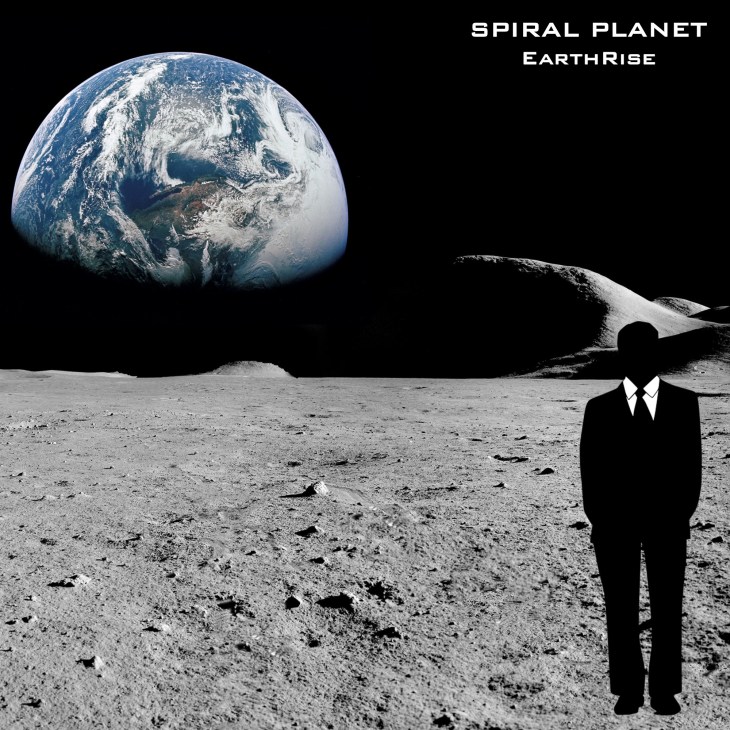
Yes, fan(s), tonight is the night we’ve all been waiting for.  Today sees the release of my latest project, EarthRise by the band Spiral Planet, of which I am a member.  I produced this album, and it took about 16 months to complete, as well as finish it.

Tonight, at Two Rivers Production Company in Coombe Hill, just outside Cheltenham, England, I shall be performing with the band at the album’s launch party during which we shall be playing about half the songs from the album plus a couple of newbies.

Nervous?  Not really.  I’m more nervous about the reception of the album than the gig itself.  Plus the fact that I am in too much physical pain to be nervous.  I’m playing keyboards in the band, the instrument that I have played in every band I’ve been in, apart from the very first one, Scarlett Llama, back in 1982.

Actually, as I wrote the above, I did feel a bit nervous about the gig.  I suppose there is always some apprehension before a big event in one’s life.  And this album is a big event, certainly for me – we have had media attention for I think the first time that I can recall – a 25-minute radio broadcast on Dean Radio on Sunday, and a piece on The Local Answer‘s website; hopefully someone from that particular magazine will be at the gig tonight.

I have to give a small talk on the history of the band as well, and I’m always pretty nervous before speaking in public, more so than playing music.  I don’t know why that is.  The talk will be just a few minutes, but even so I have been pondering it for days now, even thinking of writing a script!

Please find below a copy of the album cover.  If you click on it, it will take you to the Spiral Planet Facebook page, at which you – yes you – can request band leader Mark Millar to send you a copy of the album for a measly sum of £10, part of which (certainly before Christmas at least) will go towards a charity called PTSD Resolution, that helps those suffering from that condition after having been in a war zone.

Not sure whether the album is worth your hard-earned wonga?  Have a listen to each and every track for nowt on the Spiral Planet YouTube Page!  See you on the other side! x


EARTHRISE (2018) by Spiral Planet

The Probability of Life

Let me say right from the off that I am not a scientist.  I am the son of a scientist, but I am not a scientist myself.  I have no more than a very basic understanding of astrophysics; I know what it is, I know very broadly what it’s about, and I can spell it.  Like most of the world’s population, I know the names of the most commonly known parts of astronomy – Mars, Jupiter, Uranus, that sort of thing.  And, like most of the world’s population, my favourite constellation is Orion, because of the three stars in a row that comprise his belt.  So I am not coming at this from a scientific perspective.

Or a religious one.  I believe in a divine power, I don’t call it God, and I certainly don’t follow any of the individuals that came to Earth over the centuries claiming to be his son, his messenger, his hairdresser, whatever.  I’m sure they were all very nice people, but they all suffered from this delusion that they were somehow more closely connected with the being that runs the Universe than the rest of us and that they were the only means by which the rest of us mere mortals could form any kind of a connection or bond with this being.  I could pick holes in the Bible all day long,

Or a conspiracy theorist one.  I must admit to liking a good conspiracy theory, they are entertaining, but not necessarily believable.  So this blog is not going to tell you that alien species invaded Earth in 1947 and were captured by the U.S. Air Force.  Perhaps they did, I have no idea.  But this isn’t about that.

This is about mathematics.  Or at least, the power of mathematics.  Oops, I forgot to mention that I am no mathematician; indeed, I am about to confess something that I have not told anyone except my dear wife since 1982: I cheated to get into the top set in mathematics at school.  We used to have this thing called a log book back in the day.  It was a thin book containing loads of mathematical tables and it had an orange cover.  You were allowed to take them into the examination that would determine which set you would go into for maths.  We did a test paper and I wrote all the answers down inside my log book.  By chance, many of the questions came up in the examination proper.   I was in the top set for maths.  Just shows you what a joke ‘streaming’ is in education.  The feeding of children into sets that would not only determine the course of their lives but the amount of ridicule you would get if you were in the bottom set.  God, it felt good to be at the top.

But I digress.  There is, however, something relevant in the previous paragraph: the chance that the same questions that were on the test paper came up in the examination itself was, like, a gazillion to one.  But they did.  And I got into the top set for maths.

And that is the approach that I want to take here: what is the likelihood that alien life forms exist out there somewhere, hitherto undiscovered in the Universe?  I would suggest that the likelihood is so high that it must almost be a certainty.   And the only thing you need to do is look at the sheer power of numbers.  No need for any telescopes, red-shift light analysis, or any of that gubbins.  You just need to look at it numerically.

Let’s look at two of the billions, possibly trillions of galaxies out there.  Ourselves, the Milky Way, and our neighbour, Andromeda.  In about four billion years’ time, maybe a little longer, Andromeda is set to merge with the Milky Way in one great big galactic tango before settling into what I would like to call an übergalaxy of sorts.

In that new galaxy alone, and in the total of the two current galaxies that will go to form that übergalaxy, there will be/are something in the region of one trillion, two hundred and fifty billion stars.  I’ll run that by you again, this time numerically: 1,250,000,000,000 stars.  Ish.  And we are the only planet with life on it, apparently.  The chance of that would be the equivalent of one human winning $1,250,000,000,000 on the lottery.  Obviously not impossible, but very, very, very, very, veryvery unlikely.

Now, people say to me, look, Stephen, we’ve heard all this shit before and the answer is simple: if there was alien life out there, they would have visited us by now, and we would all know about it; indeed, many on Earth would be at least half-alien, and there would be another pressure group to be politically correct about.

Have we been visited by aliens before?  Possibly, but I’m sceptical.  I do not possess sufficient relevant scientific or historical knowledge to say categorically either way, but I do know that, whether it has happened or not, it is statistically very possible that it could happen at some time in the future, or is happening now.

Let’s say there are 1,250,000,000,000 stars in the galaxy, and, oh, 0.0000001% of them have planets spinning around them that may either be hospitable to life or already have life on them.  Do you know how many potentially life-bearing planets that would be in our new übergalaxy?  1,250!  That’s one thousand, two hundred and fifty, from just 0.0000001% of the galaxy.  Even if you were generous, and said perhaps only one per cent of the stars in the galaxy have life, or the possibility of life, that’s 12,500,000,000 just from one per cent of what are currently these two neighbouring galaxies: Andromeda and the Milky Way.

Now, you might be thinking: come on, you can look all this stuff up on Wikipedia.  Why is it of any interest to us?  The simple answer is, it should be.  It ought to be of interest to us.  We are this pale blue dot, as Carl Sagan called Earth, orbiting our sun.  Who’s to say there are no aliens out there looking at us and going, I wonder if there’s life on it?  I write this stuff now because I’m thinking about it now.  Neil deGrasse Tyson once said, imagine taking a cup full of water from the ocean, looking at it, and saying, there are no whales in the ocean.  In the case of the Universe, and even the two galaxies under discussion in this blog, there must be plenty of whales in this ocean. x

Shameless Self-Publicity


Being an avid reader of the news, I couldn’t help but notice that some of the stories – at least three, in fact – relate to pop stars giving their opinions on things, or talking about their music, in the week that their respective albums are being released.  

I’ve read stories just this afternoon on Christina Aguilera, Muse and Olly Murs.  Murs had this to say about the show that discovered him, The X Factor:


“I’d hate to see a show like The X Factor not be on TV any more, because it’s still one of the best.”

Source: BBC News Music News LIVE

Yes, from his perspective, I would have to agree with that, especially since that show gave him the opportunity to release the album, just last Friday coincidentally enough, which he is now shamelessly whoring.  

Muse, on the other hand, were actually talking about the album Simulation Theory which, coincidentally enough, was released just last Friday and which they are now shamelessly whoring. 


With this album there was quite an effort to sort of look beyond, to look both to the past and future simultaneously.

Matt Bellamy; Source: BBC News Music News LIVE

I won’t write about the Christina Aguilera incident because that’s just embarrassing; both for her and for the rest of us. 

And of course, I fully understand the irony that, even if one person only ever reads this post, it has promoted both of those artists’ albums still further.

Furthermore, I also understand that the entire motivation behind the music industry is to promote their artists’ wares, how else are you going to sell the albums in the shedloads required to make everybody filthy rich?

The entertainment industry as a whole has this whole promotion thing down to a fine art.  If a major new TV series is coming on the telly, you’ll get news stories featuring those actors, or simply about the show – of course, why not?  

It’s because people are fundamentally lazy, and the internet has done little to change that – indeed, it’s made it significantly worse.  Nobody goes looking for music or other entertainment any more; they’ve got to have it dropped in their laps.  I’ve got absolutely no problem with people promoting their latest record, book, movie, whatever; it’s just the cynical way that each artist is dealt with and told to do, to perform said promotion. 

Movie promotion works slightly differently.  I’ve seen it documented that actors and directors (typically) will sit in a hotel room all day while journalists from all periodicals, TV, radio and the blogosphere will file in and out and be given, I don’t know, fifteen minutes with the person in question. 

It’s no wonder that, by the end of the day, actors will get fed up with being asked the same questions in the same way and the journalists think that they are the first to do it.  

When the likes of you or I go to a job interview, it is the questioner who holds all the cards, who is in charge, basically.  But for TV and entertainment interviews, the questioner often sits timidly while the actor rants and rages at them, acting like the world revolves around them, which in a lot of cases, it does.  It’s funny how the dynamics of life works.

As I said, I’m not averse to it, I recognise that, if you have a book, movie, album, TV show out, you’ve got to let people know it’s there, or else they will not go looking for it.  I am having to do this myself, because I have an album out – EarthRise by Spiral Planet, out on Friday November 30 – which I produced.  So, because I am not in the public eye, I expect I shall have to come up with all sorts of crass ways to promote the album and to try and persuade people to part with even more of their hard-earned pay to buy it, despite the fact that those people will already have bought the new Muse, Olly Murs, Mark Knopfler, Take That, or Beatles albums already.  I don’t know, I expect I’ll have to write one of my smug little blogs, or put unfunny little messages on Facebook, that sort of thing.  

The album, EarthRise by Spiral Planet, out on November 30, is a double album that I produced that isn’t very likely to sell in the gazillions that Muse will, but if it sells one copy as a result of this blog, or perhaps through Facebook, then that will be job done.  I don’t have expensive press agents at my disposal, when you’re at the top you get everything done for you, but here at the bottom, you’ve got to do it all yourself.  You get away with it if you’re Take That, but for us, it looks like crass, arrogant, egotistical self-promotion.  Have a listen to the album and see what you think.  x

Rant Round-Up #1

The People’s Vote March, London, UK, October 20, 2018

At last!  A proper protest!  There hasn’t been a march like this since the Iraq war of 2003, and it’s taken Brexit to get apathetic Britain off its collective arse and onto the streets.  Police estimates are that anything up to 700,000 people took part in yesterday’s protest, and if true that’s an excellent turnout.

But this morning, true to form, Spy News was asking, does the march make a second vote on Brexit more likely?  In and of itself, no.  British governments have a long history of not giving in to protesters in a heartbeat.  But what the march does is send a very clear message to an already precarious government that Brexit is an issue that could see them fall if they are not too careful.

Tories (Conservatives) are notoriously divided on the subject of Europe and the EU.  And, as it turns out, so is the rest of the country.  But one thing public protests do is demonstrate very clearly the sitting government’s relationship with its voters.  The People’s March of 2018 vs. The Iraq War March of 2003 demonstrates this very clearly indeed.

In 2003, the sitting government was formed by the Labour Party with warmonger Tony Blair as its prime minister.  In the most recent election at that time, in 2001, Labour had won power with a majority of 167 seats, twelve down from 1997, but still healthy enough for Blair to push through anything he wanted without the need for trivial matters such as the support of the country.  Remember, our democracy is founded on this method of politics.  Certain MPs take on the role of what is known as a ‘whip’ – i.e., someone who goes to all their party colleagues and tells them to vote according to the party line, or they will be in big trouble.

So: Party Leader says we’re going this way, it becomes policy, whips force the party members to vote that way, and bang! an instant majority is formed; which is how, in 2003, the UK followed George W. Bush into Iraq to avenge Bush’s father, on the pretext of there being (nonexistent) weapons of mass destruction.  In other words, the 2003 Iraq War Protest had no chance of convincing the government.

As for yesterday’s march?  This is not such a slam dunk for the Tories.  Their majority in Parliament is slim; so slim, in fact, that they have had to call in Northern Irish party DUP to shore up the numbers and get anything they want through on a vote… except the DUP, ultra-hard right-wingers that they are, disagree with the Conservatives on the one issue they really could do with their help on right now: Brexit.

The DUP want Brexit, they want it hard, and they want it to hurt.  It’s all a bit complicated, but The Guardian published an excellent article last Thursday to help us simpletons understand what’s going on:

https://www.theguardian.com/politics/2018/oct/18/brexits-doom-loop-the-blood-red-lines-that-drive-mays-dup-allies

So, if a ‘comprehensive trade deal’ cannot be reached by December 2020, then the EU wants there to be no hard border between Northern Ireland and the Republic to its south and west.  Effectively, that would mean Northern Ireland would stay under the single market after that date.  Oh, no, say hard Brexiters such as Jacob Rees-Mogg and Boris Johnson, backed by many Tory MPs – not to mention their partners in what is, don’t forget, coalition government, the DUP.  Not only would that break up the UK, but it would inflame all sorts of arguments once again about the sovereignty of Ireland, Northern Ireland, and the rest of it.  Prime Minister Theresa May then proposed a proposal in which the entire UK could remain under the EU single market, but call ourselves independent of the EU if anyone asks.

Pro-Brexiters, as you might expect, didn’t like that either.  It would mean, without a doubt, that after the UK becomes separate from the EU in December 2020, we would remain tied to their laws and rules beyond that date, “for the time being,” (which means forever).

DUP leader Arlene Foster is not mincing words when it comes to her views on Brexit.  Phrases such as “Blood Red Lines,” and other phrases spoken by others but clearly from her point of view: “We’re going to squeeze their balls until their ears bleed,” is an eye-watering description of their determination not to let go of the Northern Ireland they fought many decades for.

Back to the March: all of the above political shenanigans means that, while Theresa May is not going to open up the office tomorrow and, first thing, dismantle Brexit; it certainly does give a clear voice to the 48% who voted to stay in Europe, a voice that she may have to listen to in the not-too-distant future.

Anjem Choudary

Anjem Choudary is what the media likes to call a “radical Muslim preacher.”  He is an Islamist, a political way of pushing Islam down the throats of British people here in the UK.

This week, Choudary was released from prison, having served about half of a five-and-a-half year sentence banged up in Belmarsh for inviting others to support the Islamic terrorists ISIS (The Terrorists Formerly Known as al-Qaeda).

But in truth, whatever the media likes to call him, Anjem Choudary is nothing more than a psychotic blowhard, a loudmouth yob whose religion, which in his case is no more faith-based than it is cultural, has no real context in his rhetoric.  Sure, he talks about love for “Allah” (always emphasising the second syllable), but that’s because he has to, otherwise, no-one will listen to him.  He has to make it sound like a faith in God; otherwise, he will not be able to jump up and down and protest loudly about his “rights.”

Often, you hear people argue that, if Choudary and others hate Britain so much, why did he and the others come here in the first place?  I have actually heard this argument used.  In Choudary’s case, the reasoning is simple: you cannot deport Choudary because he is a British citizen through and through, British born and bred.  He did not ‘come here,’ he was already born here.  Where would you deport him to?

Choudary is a supporter, you will be surprised to learn, of the introduction of Sharia Law in the UK.  This is law based on Muslim traditions and values.  He is a vocal supporter of many Muslim anti-Western groups in the UK, and also claimed support for those who committed the terrorist atrocities in the USA on September 11, 2001; and in London on July 7, 2005.  Yes, yes, yes… he supports those acts but you notice did not take part in them.  Others did that for him.

For someone who supports radical Sharia Law, Choudary certainly led a wild life as a student, a lifestyle he now regrets.  While he may have changed his values, he still got to do so, while others who are killed by ISIS and other organisations do not have that opportunity.

It is alleged that Choudary spent time recruiting members for secret Jihadist training camps in the UK and in other parts of Europe.  He then took part in an unlawful rally in London, and here his problems with the law began.

Choudary is a follower, not a leader.  Much of his life has been under the shadow of Omar Bakri Muhammed, a militant leader who left the UK and vowed only to return as a tourist!!!  Choudary followed him to Lebanon and stayed there until they were both deported back to the UK in November 2005.

Choudary loves the attention he gets.  You can see it through the smug smile that is fixed on his face during every interview he gives.  Stupid television media give him the opportunity to spout his nonsense time and again.  He will say things he knows will wind up his interviewer and, by extension, the British public.  This is what Choudary had to say concerning his views on the UK as a potential Muslim country in 2005:

Look, at the end of the day innocent people—when we say ‘innocent people’ we mean Muslims—as far as non-Muslims are concerned they have not accepted Islam and as far as we are concerned that is a crime against God.

Anjem Choudary, BBC HARDtalk (8 August 2005) (Sourced off Wikipedia)

It makes one wonder what people like Choudary would do if the whole world was Muslim.  He would find something to argue about – people like that always do.

Mercury, Freddie!

This week, European and Japanese space agencies launch a rocket ship, unmanned, that is going to travel to the planet Mercury, the closest planet to our sun, at a distance of some five billion miles.  Because of the Sun’s gravity, the spacecraft is going to have to travel very carefully indeed in its path to its destination, involving some eight flybys on an elliptical journey.

Every space mission costs a lot of money, and this one is no exception: the simple act of sending something of this nature to a specific destination is costing the two space agencies somewhere around 1.5 billion pounds sterling.  I hope they’ve saved up.

And what is it going to do when it gets there?  We already know that Mercury is far too hot to entertain life; in fact, it’s even too hot to entertain the rocket that’s being sent there!  The craft will never land on Mercury, it can’t; but it will do its work – including analysis of the surface rock – from space during the six times it is going to fly past the planet, hopefully dodging the unimaginably huge gravity of the Sun.

Its journey to Mercury is by no means a done deal.  Between here and there are all sorts of asteroids, space debris, planets, other potential hazards, and, of course, the Sun.  So, it’s going to have to tread carefully as it travels at enormous speed across the universe (that’s a great idea for a song).

And where was the Transfer Module that houses two orbiters that will do the work built?  Stevenage, home of Knebworth; site of the final concert given by the band Queen, in August 1986.  That seems to be a nice, fitting coincidence.

x

The Deaf Penalty

To my mind, the issue is simple; you don’t kill people, and that’s it.

But many folks who think they have a handle on the issue just won’t listen, and one finds oneself almost punished to the death penalty oneself, in the sense that one can feel the sense of terminal inevitability that the Death Row prisoner must feel.

What “terminal inevitability,” I hear you ask?  The terminal inevitability that nothing is ever going to change, people can never change, and you will always end up avenging a death for a death because that’s the way human beings will always respond to something like that.

Nobody listens, everybody talks over each other, shouting, arguing, hearing but not listening.  And this comes from those on both sides of the argument.

This is part of the reason why blogs and online rants are good; firstly, you can choose to either read it or not, and secondly, if you do read it, you can then choose to agree with it or the reverse.  Finally, once your decision is made, if indeed that is what happens, you can then post/troll the person until they finally give in and go, “Whatever, dude!”

I do not believe killing another human being is right or justifiable under any circumstances, in other words, I would not or could not do it.  But I have heard tell from down the village that there are circumstances which could lead a person to kill another: self-defence, for example.  If someone feels that their life is in danger, they would kill to defend their own.  That is in our nature as animals.  That we cannot help.

Or can we?

As human beings, with sufficient intelligence to be able to suppress certain behaviours wherever possible, I believe it is possible to contain that urge to kill another and perhaps find some other way to detain your opponent and preserve your own life in the process.

Those who have killed to preserve their own life, or their own property, have often found themselves on the wrong side of the law, especially here in the United Kingdom.  I believe that the USA has somewhat less stringent views on killing in self-defence, and it can be accepted as a just cause when dealing with certain homicide cases.  Basically, in instances where this has happened, the law is saying to the prisoner, OK, somebody tried to kill you, but you killed him instead to preserve your own life.  Well, since you preserved it, you can spend the rest of it in jail.  Or (prior to 1965 in the UK) we’ll hang you.

Why is it justifiable to punish a death with a death?  To me the entire argument is ridiculous, and I don’t feel any other justification than it is wrong.  It would be like punishing a robbery with a robbery, or a rape with a rape.

There are so many moral, religious and/or practical reasons that are trotted out whenever the debate occurs.  Apparently, there are many occasions in the Old Testament where we are told that to punish someone with the death penalty is not only justifiable but indeed the only one available.  But I thought that the faith, with all its denominations, was called Christianity, which means that they follow Jesus Christ, whose message trumps that of the Old Testament.  Christ talked of peace, of love, of turning the other cheek.  Christ did not talk of killing out of revenge or punishment; he said, “Let him who is without sin cast the first stone.”  That means nobody has the right to do it.  I’m not a Christian myself; I’m simply making the point that, as a Christian, you cannot justify the use of the death penalty from the Bible.  Christianity is – or should be – about peace, and I don’t see why that concept should be difficult unless one deliberately makes it so in an effort to save face in the context of the argument.

Anyone who knows me will tell you that I invariably do not use much in the way of references when ranting.  It’s not the point of ranting.  Ranting is about getting something off your chest, right or wrong, and although I do not deliberately set out to say something that is incorrect, I’m not going to slow down my train of thought by Googling something.  It is my feeling on the matter that, er, matters here.  And my feeling is that one human being is not entitled to kill another human being.  When an unprovoked murder takes place, you’ve got to look at the reasons why it happened, and then administer a course of action accordingly.  This course of action may in part be a punishment, it may be something to protect the rest of society or both.

Of course, I am not suggesting that society does not require protection – especially if someone is likely to be a serial killer.  Sadly, while their mental health does need looking at, they must be put away, and probably for life.  It is a sad fact of the situation.  But kill them?  No.  I’m also not saying that I, too, have not had the instinctive cry within me that a perpetrator of a particularly heinous crime should die for their efforts.  Of course I have.  But that does not make it right, and I am glad that that instinct has been suppressed in myself and in others (where it has happened in countries without the death penalty).

The death penalty only exists, as far as I can see, to please that instinctive part of the mob mentality that has people shouting, spitting and throwing eggs at police vans carrying a killer or a child rapist to prison in a case that the crowds have no personal connection with.  When someone is sentenced to death, the execution of that sentence could be more than twenty years away, and it is said that part of the punishment exists in the prisoner’s contemplation of their inevitable end before it happens.  It makes the victims’ families, prosecuting attorneys and the public at large feel good.  It gives them a certain amount of unspoken power.

So, throw away your Bibles, your religious and/or political texts, and just listen. Listen to reason, and to your conscience.  If you are able to in a country that practices the death penalty, campaign for its end.  Listen to me, listen to those who advocate peace, listen to your heart.  That will tell you that the death penalty is a pointless exercise in group avengment and must be ended as a practice and a legal punishment in every country worldwide – whether or not it is in your religious text.

x